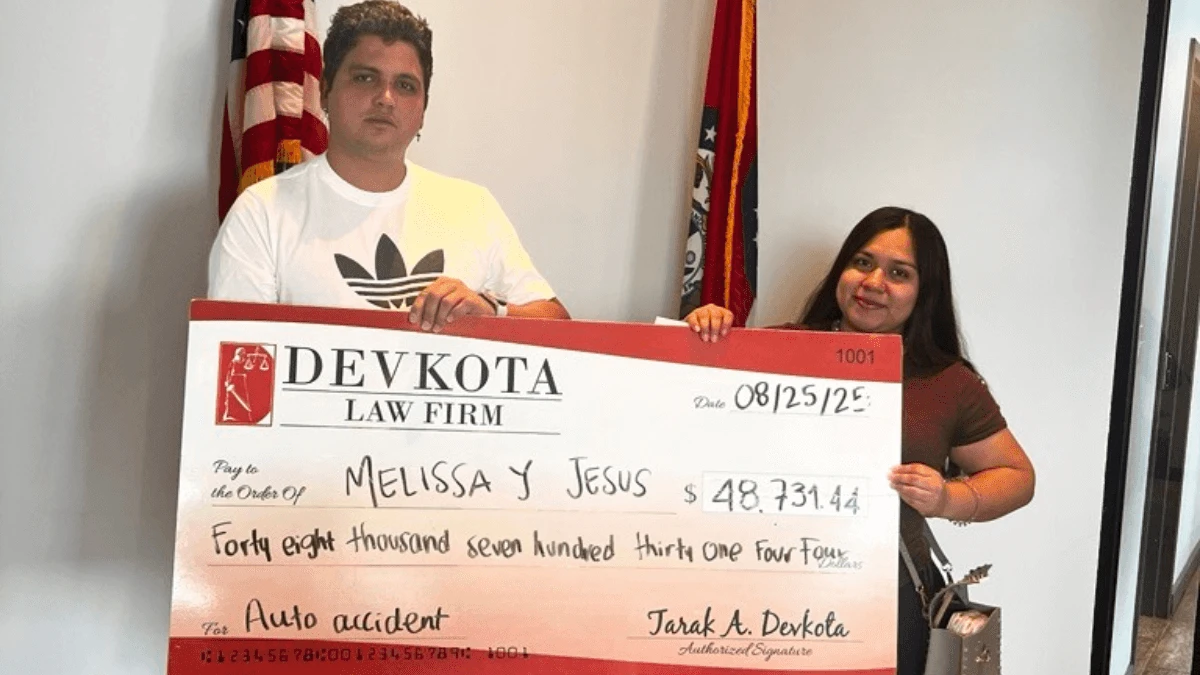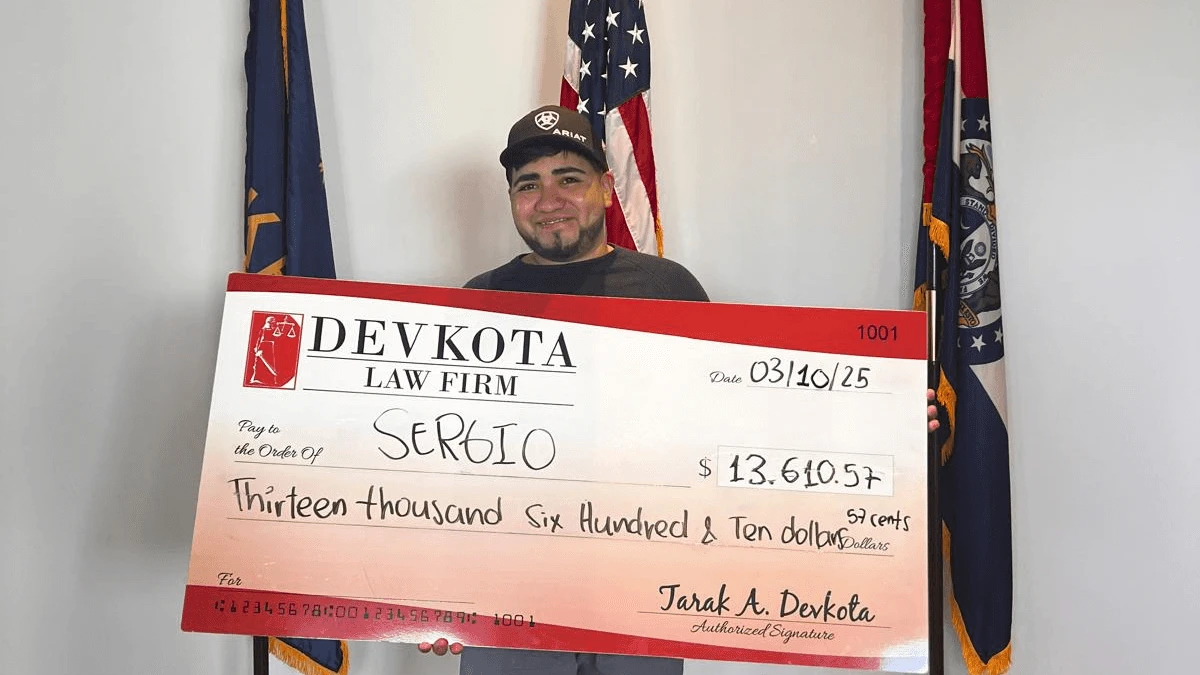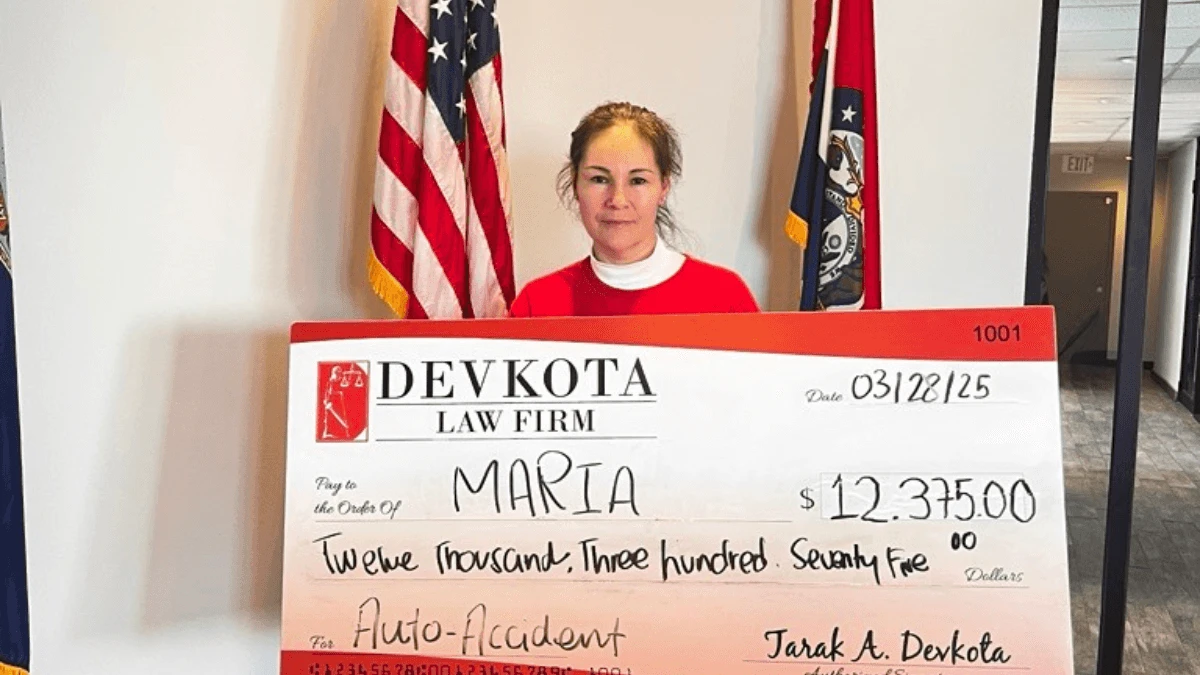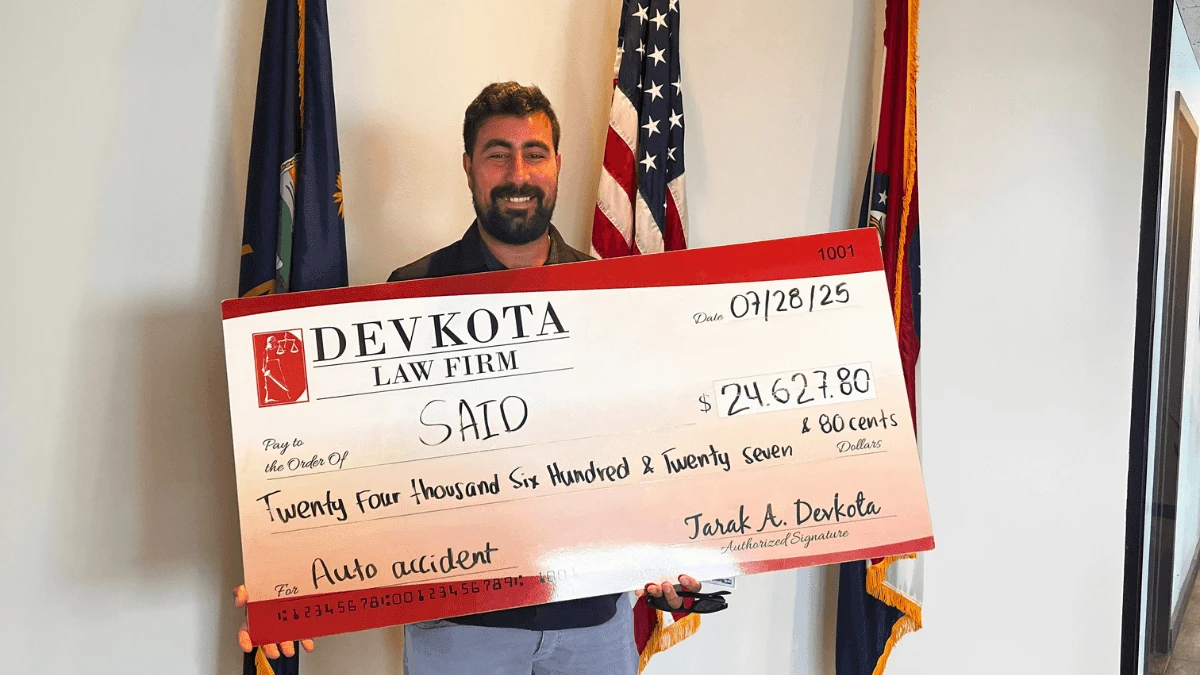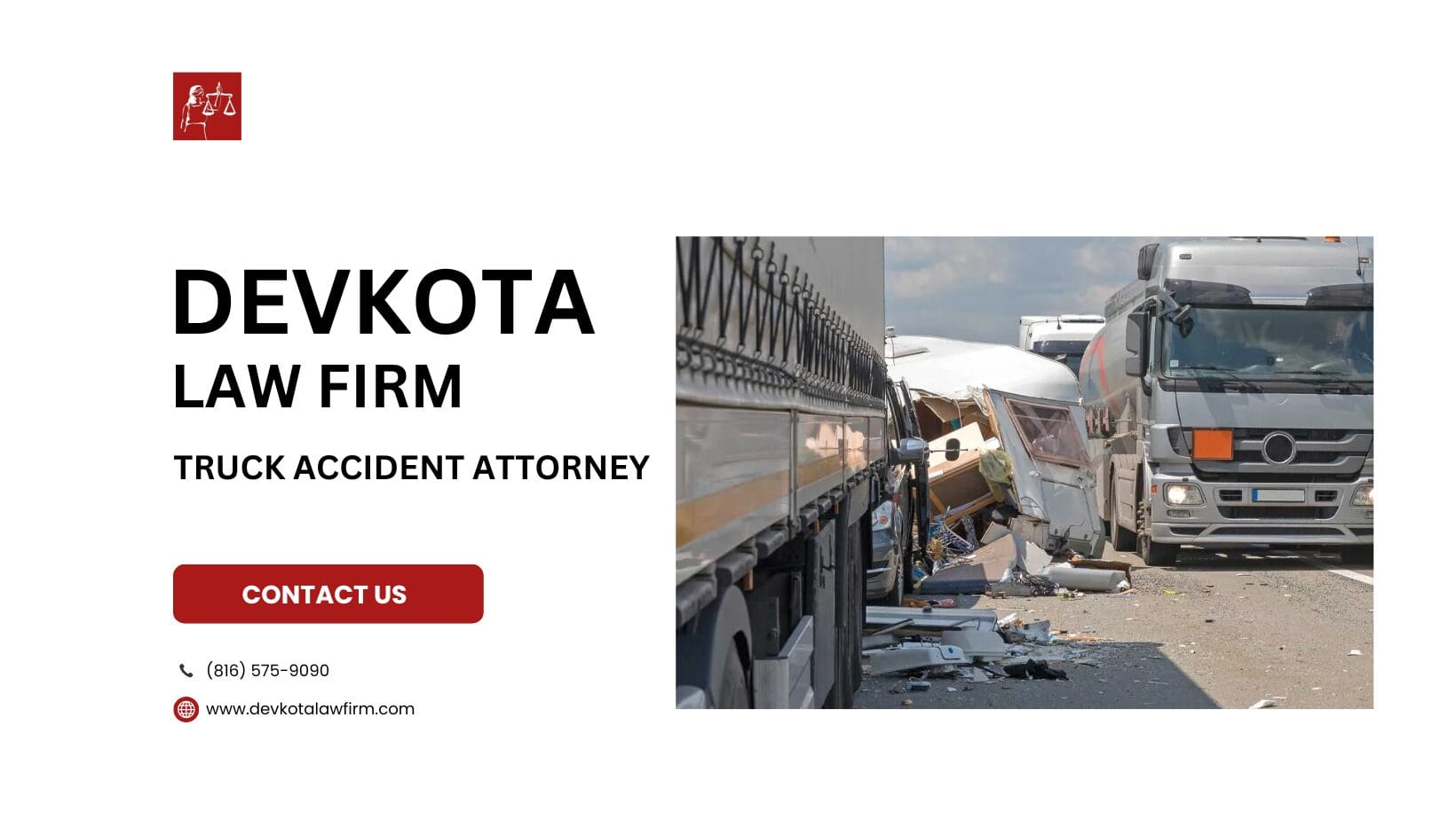
If you were injured in a truck accident in Kansas City, you need an experienced Kansas City truck accident attorney who understands both Kansas and Missouri law, federal FMCSA trucking regulations, and how to fight back against well-funded insurance defense teams. At Devkota Law Firm, attorney Tarak Devkota has spent 26 years representing truck accident victims across Kansas and Missouri. We handle every case on a contingency fee basis, meaning you pay nothing unless we win. If your crash happened in Independence, Wichita, or anywhere across Kansas, our attorneys are ready to protect your rights and pursue every dollar of compensation you deserve.
Truck accident injuries are rarely minor. A fully loaded semi-truck can weigh up to 80,000 pounds. When that kind of mass collides with a passenger vehicle at highway speed, the results are catastrophic: traumatic brain injuries, spinal cord damage, shattered limbs, and permanently altered lives. These cases also involve layers of legal complexity that go far beyond a typical car accident claim, including federal trucking regulations, multiple liable parties, electronic evidence that disappears quickly, and insurance companies with experienced legal teams working against you from the moment the crash occurs.
Quick Legal Overview:
- Statute of Limitations (Kansas): 2 years from injury date (K.S.A. 60-513)
- Statute of Limitations (Missouri): 5 years from injury date (Mo. Rev. Stat. Section 516.120)
- Fault Rule (Kansas): Modified comparative fault, recover if less than 50% at fault (K.S.A. 60-258a)
- Federal Oversight: FMCSA regulations govern commercial carriers (49 C.F.R. Parts 300-399)
- Minimum Carrier Insurance: $750,000 per occurrence for general freight (49 C.F.R. Section 387.9)
- Attorney Fees: Contingency basis, no upfront costs, no fee unless we win
- Free Consultation: Available 24/7 at all Kansas offices
Why Kansas City Truck Accident Cases Are Different from Car Accident Claims
Truck accident cases are among the most legally complex personal injury matters handled in Kansas and Missouri courts. Understanding why they are different helps you see why having experienced legal representation is not optional.
"I have handled truck accident cases for over two decades, and the single biggest mistake I see injured victims make is waiting too long to call an attorney," says Tarak Devkota, founder of Devkota Law Firm. "Trucking companies dispatch their own investigators and attorneys within hours of a serious crash. If you are not represented immediately, you are already behind."
Commercial trucking is a heavily regulated industry. The Federal Motor Carrier Safety Administration (FMCSA) issues detailed rules governing:
- How many hours a driver can operate without mandatory rest
- How trucks must be maintained and inspected
- What cargo securement standards carriers must meet
- What qualifications drivers must hold before operating a commercial vehicle
- What drug and alcohol testing requirements apply
When those rules are violated and someone gets hurt, those violations become powerful evidence of negligence in your case.
Unlike a two-car collision where liability typically falls on one driver, a truck crash can involve multiple responsible parties:
- The truck driver who caused the crash
- The trucking company that employed or contracted the driver
- The company that loaded or secured the cargo
- The truck manufacturer if a defect contributed to the crash
- A maintenance contractor who serviced the brakes or tires
- A freight broker who matched a shipper with an unqualified carrier
Each of these parties carries insurance. Each has attorneys working to minimize their exposure. Without experienced legal representation, you may settle against one party and unknowingly release all the others from liability.
There is also the matter of critical electronic evidence. Commercial trucks are equipped with Electronic Logging Devices (ELDs) and Event Data Recorders (EDRs), commonly called black boxes, that capture speed, braking, steering inputs, hours of service data, and GPS location in the moments before and after a crash. This data is invaluable to your case. It is also routinely overwritten or discarded if a legal preservation notice is not sent immediately after the crash.
This is why calling a Kansas City truck accident attorney as soon as possible is so critical. Every hour of delay is an hour the other side uses to build its defense.
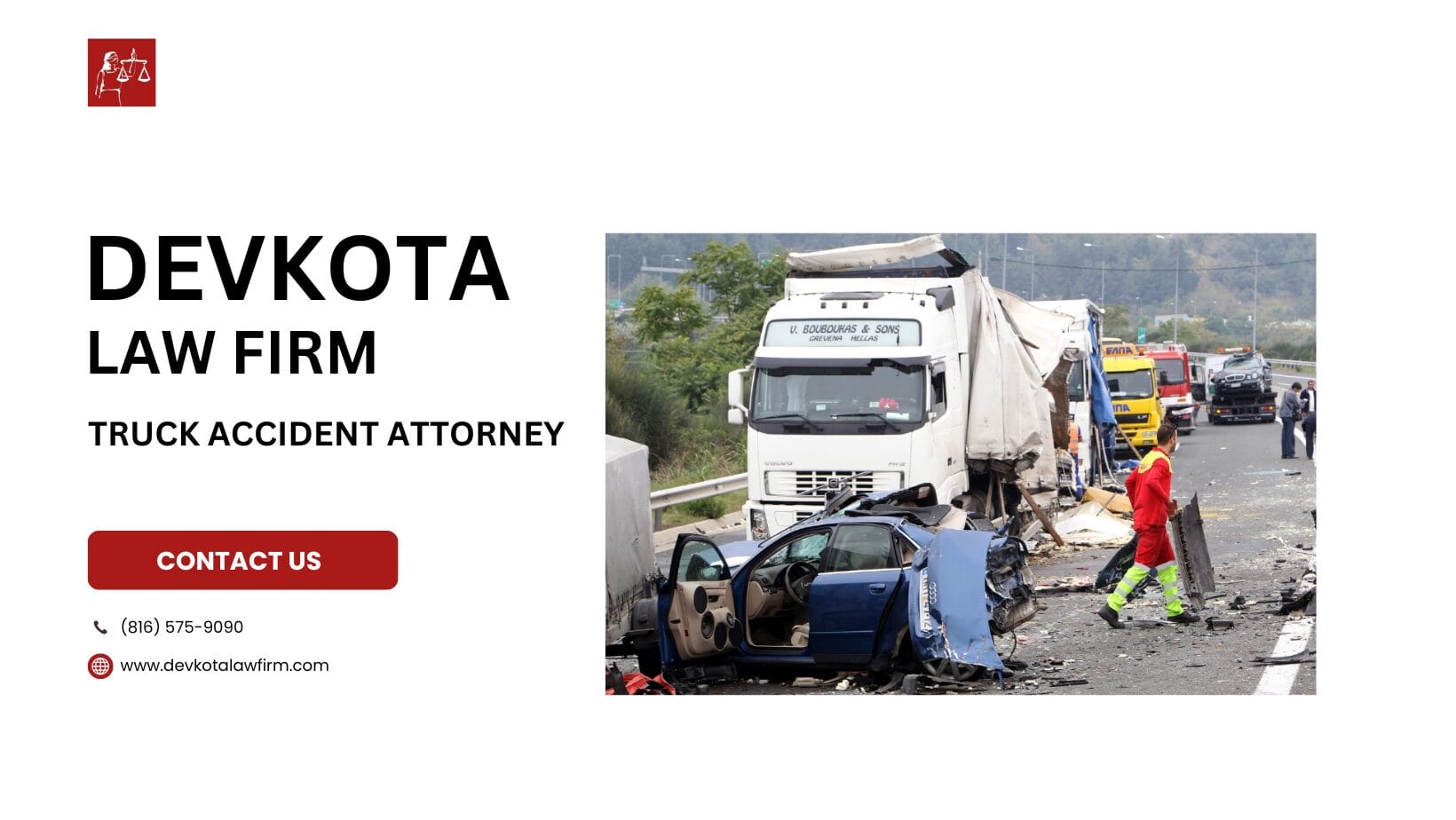
How Kansas and Missouri Law Applies to Kansas City Truck Crashes
Kansas City straddles the state line, which means your case may be governed by Kansas law, Missouri law, or both, depending on where the crash happened, where the trucking company is based, and other jurisdictional factors. Our attorneys evaluate jurisdiction as one of the first steps in every Kansas City truck accident case because it directly affects your rights and potential compensation.
Kansas Law applies K.S.A. 60-258a's modified comparative fault rule:
- You can recover damages as long as your share of fault does not exceed 49 percent
- Your compensation is reduced proportionally by your fault percentage
- Example: If you are 20 percent at fault and your total damages are $500,000, you recover $400,000
- Kansas statute of limitations: 2 years from the date of injury (K.S.A. 60-513)
Missouri Law follows a pure comparative fault system under Mo. Rev. Stat. Section 537.765:
- You can recover damages even if you were 99 percent at fault
- Your award is still reduced by your fault percentage
- Missouri statute of limitations: 5 years from the date of injury (Mo. Rev. Stat. Section 516.120)
Both states recognize respondeat superior, the legal doctrine holding employers liable for their employees' negligent acts committed within the scope of employment. This means the trucking company, not just the individual driver, is typically a named defendant in serious truck crash litigation.
"Jurisdiction is not just a procedural question. It is a strategic one," says attorney Tarak Devkota. "In cases where the crash happened near the state line, choosing the right jurisdiction can mean the difference between recovering full compensation and losing the case on a technicality. We analyze this from day one."
? Pro Tip: If your crash happened near the state line or involved a carrier based in another state, jurisdiction can significantly affect your case value. Contact our Kansas personal injury attorneys immediately so we can identify the most favorable jurisdiction before time-sensitive deadlines pass.
Federal Regulations That Govern Commercial Truck Drivers and Carriers
One of the most powerful tools in a truck accident case is the Federal Motor Carrier Safety Regulations (FMCSRs), codified at 49 C.F.R. Parts 300 through 399. These rules set minimum safety standards for commercial carriers operating in interstate commerce. When a driver or carrier violates these regulations and that violation causes your injuries, it constitutes evidence of negligence per se, meaning the violation itself is evidence of fault.
"Federal regulations give truck accident victims something most car accident cases do not have: a detailed, written standard of conduct that carriers are legally required to follow," explains Tarak Devkota. "When we can show a carrier violated those standards, we do not just have a negligence claim. We have documented proof that the carrier chose profit over safety."
Hours of Service Rules (49 C.F.R. Part 395)
Fatigued driving is one of the leading causes of serious commercial truck crashes. The FMCSA's hours of service rules establish clear limits designed to keep drowsy drivers off the road:
- Maximum of 11 hours of driving after 10 consecutive hours off duty
- No driving after 14 consecutive hours on duty
- Mandatory 30-minute break after 8 hours of continuous driving
- Weekly limits of 60 hours on duty in 7 consecutive days or 70 hours in 8 consecutive days
These rules exist because research consistently shows that fatigued driving impairs reaction time and judgment at rates comparable to drunk driving. Electronic logging devices were mandated precisely to prevent drivers and carriers from falsifying paper logs, a once-common practice.
When our attorneys investigate a truck crash, the first things we subpoena are:
- ELD data showing actual driving and rest times
- Dispatch records showing delivery schedules and communications
- Fuel receipts documenting true location and timing
- GPS fleet tracking data from the 72 hours before the crash
Violations of the hours-of-service rules have helped Tarak Devkota and the Devkota Law Firm establish liability in cases where drivers and carriers initially denied any wrongdoing.
Drug and Alcohol Testing Requirements (49 C.F.R. Part 382)
Commercial drivers are subject to far stricter drug and alcohol standards than ordinary motorists:
- Legal blood alcohol limit for CDL holders: 0.04 percent, half the limit for private drivers
- Required testing: pre-employment, random, post-accident, and reasonable suspicion
- Post-accident testing is mandatory when there is a fatality, when someone is transported for emergency medical care, or when a vehicle is towed from the scene
Failure to conduct required testing, or evidence that a driver tested positive and was allowed to operate a commercial vehicle anyway, significantly strengthens a victim's case and can support punitive damages.
Vehicle Maintenance and Inspection Requirements (49 C.F.R. Part 396)
Trucking companies are required by federal law to maintain systematic inspection, repair, and maintenance programs for every vehicle in their fleet:
- Drivers must conduct pre-trip and post-trip inspections and document any defects
- Carriers must retain maintenance records for at least 12 months
- Inspection records must be kept for 14 months
- Known defects must be repaired before a vehicle returns to service
Brake failures, tire blowouts, and steering defects are among the most common equipment-related causes of serious truck crashes. When a carrier has ignored required maintenance, failed to repair known defects, or allowed a vehicle with out-of-service violations to remain on the road, that evidence is powerful in establishing liability and potentially punitive damages.
? Pro Tip from Tarak Devkota: Trucking companies are required by federal regulation to preserve maintenance records, but carriers sometimes claim records were routinely discarded before the crash. Our firm sends spoliation and preservation letters to carriers immediately after being retained. These letters put the carrier on legal notice that destroying any evidence will result in court sanctions and adverse inference instructions at trial.
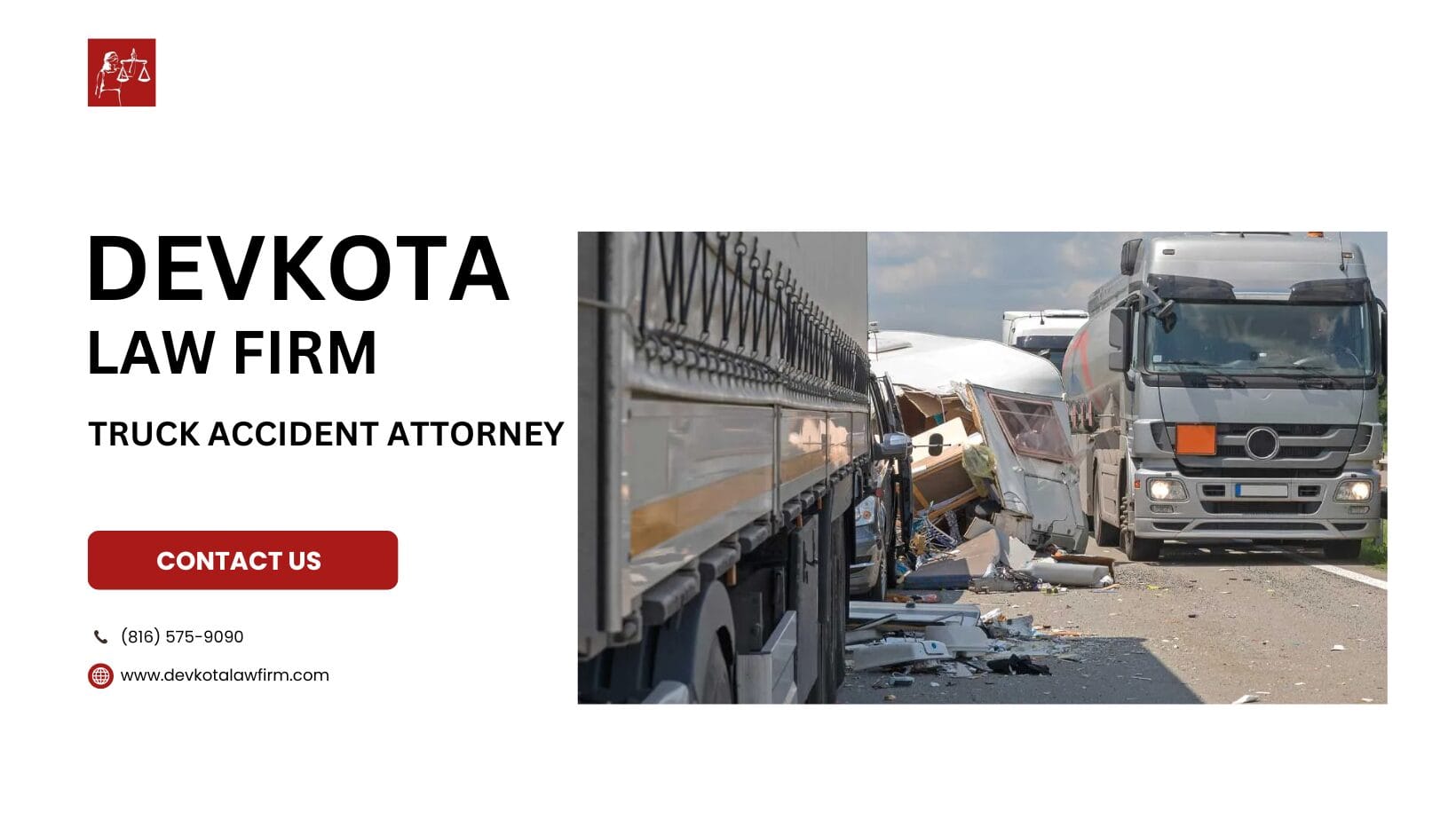
Common Causes of Serious Truck Accidents in Kansas and Missouri
Understanding what caused your crash is not just important for establishing liability. It determines which parties are responsible, which insurance policies are available, and how strong your case is going to be. Our commercial vehicle accident attorneys investigate every contributing factor before any settlement demand is made.
Based on Tarak Devkota's 26 years of experience handling truck accident cases in Kansas and Missouri, these are the causes we most commonly encounter:
- Driver Fatigue Despite ELD mandates, some carriers continue to pressure drivers to meet unrealistic delivery schedules, creating situations where drivers push beyond legal limits. Fatigued driving remains the single most preventable cause of serious commercial truck crashes.
- Distracted Driving The FMCSA prohibits commercial drivers from texting while driving and restricts handheld mobile phone use. Telematics data from the truck's own onboard systems can sometimes show a driver was interacting with a device at the exact moment of impact, providing powerful evidence of distraction.
- Improperly Loaded or Unsecured Cargo Shifting loads cause rollovers. Overloaded trucks have dramatically longer stopping distances and reduced maneuverability. Cargo loaders, shippers, and third-party loading companies can be independently liable when improper loading contributes to a crash.
- Speeding and Aggressive Driving A fully loaded semi-truck traveling at 65 mph requires approximately 525 feet to stop, nearly twice the distance of a passenger vehicle. Speeding compounds this problem significantly, and aggressive driving behaviors like tailgating and sudden lane changes create catastrophic consequences at commercial truck weights.
- Inadequate Driver Training and Qualification The FMCSA requires carriers to verify CDL validity, driving history, and drug and alcohol test results before hiring. Negligent entrustment, allowing an unqualified or unsafe driver to operate a commercial vehicle, creates direct and significant liability for the carrier.
- Mechanical Failure from Deferred Maintenance Brake defects, tire failures, steering problems, and lighting defects that result from a carrier's failure to maintain its fleet are both preventable and the carrier's legal responsibility.
- Blind Spot Crashes Commercial trucks have four large blind spots, and drivers who fail to check them before changing lanes or turning create serious dangers for passenger vehicles traveling in those zones.
Who Can Be Held Liable in a Kansas City Truck Accident?
Identifying every potentially liable party before settling is one of the most important strategic decisions in truck accident litigation. Settling too early or against too few defendants can leave significant compensation unclaimed and leave your future medical costs uncovered.
"One of the biggest errors I see in truck accident cases handled without experienced counsel is single-defendant settlements," says Tarak Devkota. "The driver gets named, a policy gets paid, and the client releases everyone else. Later we find the carrier had a $3 million policy, the shipper had separate coverage, and the maintenance company had its own insurance. That money is gone forever once a release is signed."
Here are the parties most commonly responsible in Kansas and Missouri truck accident cases:
- The Truck Driver Negligent driving, fatigue, impairment, distraction, and violations of federal safety regulations all create direct liability for the individual driver.
- The Trucking Company Often the most important defendant because it typically carries the largest insurance policy. Federal regulations require interstate carriers to maintain minimum liability coverage of $750,000 per occurrence for general freight and up to $5 million for certain hazardous materials. Carrier liability arises from respondeat superior, negligent hiring, negligent supervision, and direct violations of the FMCSRs.
- The Cargo Owner or Shipper May be liable when improper loading, overloading, or failure to properly communicate cargo hazards contributed to the crash.
- Truck Manufacturers and Component Suppliers Face product liability claims when a defective part, including faulty brake components, defective tires, or malfunctioning safety systems, contributed to the collision.
- Maintenance Contractors Who performed negligent repairs or failed to identify known defects during scheduled service may share significant liability.
- Government Entities Responsible for road design and maintenance may be liable when dangerous conditions contributed to the crash. Claims against government entities in Kansas require a written notice of claim within 120 days under K.S.A. 12-105b, a shorter deadline that many victims miss.
? Pro Tip: Never accept a settlement from any insurer without first consulting an attorney. The first offer you receive is almost certainly from just one of several potentially available insurance policies. Once you sign a release, you typically cannot pursue additional claims against other liable parties, even if you later discover they were responsible.
What Damages Can You Recover After a Kansas City Truck Accident?
Kansas and Missouri law recognize a broad range of compensable damages in commercial truck accident cases. In serious crashes, these damages can be substantial.
Economic Damages: Your Quantifiable Financial Losses
These are damages you can document with bills, records, and financial statements:
- Emergency transport and trauma care costs
- Hospitalization, surgery, and specialist treatment
- Physical therapy, occupational therapy, and rehabilitation
- Prescription medications and durable medical equipment
- Future medical costs for ongoing or long-term care needs
- Lost wages for time missed from work during recovery
- Lost earning capacity if injuries prevent full return to prior employment
- Vehicle replacement or repair costs
- Home modification expenses for disability accommodations
- In-home care and assistance costs
- Out-of-pocket expenses directly tied to your injuries
"In catastrophic truck accident cases, future medical costs and lost earning capacity are often worth more than all past bills combined," notes Tarak Devkota. "Victims who settle without a full projection of their future needs routinely end up covering those costs out of pocket for the rest of their lives. We never recommend settling until we know the full picture."
Non-Economic Damages: Pain, Suffering, and Quality of Life
Kansas law permits recovery of non-economic damages including:
- Physical pain and suffering, past and ongoing
- Emotional distress and psychological trauma
- Loss of enjoyment of life and life activities
- Permanent disfigurement or scarring
- Loss of consortium affecting your relationship with your spouse or family
Importantly, Kansas does not cap non-economic damages in personal injury cases outside of medical malpractice. In catastrophic injury cases involving spinal cord damage, traumatic brain injury, or loss of limb, non-economic damages can be substantial and should be documented from the very beginning of your medical treatment.
? Pro Tip: Start a daily pain and activity journal immediately after your accident. Record how your injuries affect every aspect of your life: disrupted sleep, inability to work or exercise, missed family events, emotional distress, relationship changes. This journal becomes powerful evidence when your attorney quantifies non-economic damages in negotiations or at trial.
Punitive Damages
Kansas courts may award punitive damages when the defendant's conduct was willful, wanton, or showed reckless disregard for others' safety. In truck accident cases, punitive damages are most commonly pursued when:
- A carrier knowingly allowed an unqualified or impaired driver to operate a commercial vehicle
- Hours-of-service records were deliberately falsified
- A carrier continued operating a vehicle with known, serious mechanical defects
- A driver had a documented history of violations that the carrier ignored
While punitive damages are not available in every case, the realistic possibility of a punitive damages claim significantly increases settlement leverage in negotiations.
The Critical Steps to Protect Your Truck Accident Case
What you do and do not do in the days and weeks following a serious truck crash can make or break your ability to recover full compensation. These are the steps Tarak Devkota recommends to every client.
Step 1: Seek Emergency Medical Care Immediately Even if you do not feel seriously hurt, get evaluated at a hospital or urgent care facility as soon as possible. Adrenaline masks pain. Internal injuries, traumatic brain injuries, and soft tissue damage often do not produce obvious symptoms for hours or days after a crash. Insurance companies use gaps in medical treatment to argue that your injuries were not serious.
Step 2: Call 911 and Obtain a Police Report The crash report documents the scene, identifies witnesses, notes observable violations, and creates a contemporaneous official record of the crash. Request a copy from the investigating agency as soon as it is available.
Step 3: Document the Accident Scene If you are physically able, photograph:
- All vehicles involved, from multiple angles
- The truck's DOT number and carrier name on the door
- License plates on all vehicles
- Skid marks and debris on the road
- Traffic controls, road conditions, and any visible hazards
- Your visible injuries
These photographs may be the only record of evidence that disappears or changes before your attorney can inspect the scene.
Step 4: Collect Witness Information Witnesses often leave a crash scene quickly. If bystanders saw the crash, get their names and phone numbers before they leave. Tracking witnesses down weeks later is extremely difficult even with a police report.
Step 5: Do Not Speak to the Trucking Company's Insurance Adjuster These adjusters are trained professionals whose goal is to minimize your claim. They will call quickly, often within hours of a serious crash, and they will ask questions designed to get you to make statements they can use against you later. You are not required to give a recorded statement to the other party's insurer. Refer all communication to your attorney.
Step 6: Contact a Kansas City Truck Accident Attorney Immediately Time is your most critical asset. Evidence must be preserved, carriers must receive legal hold notices, and black box data must be secured before it is overwritten. Our truck accident attorneys can take these steps the same day you contact us.
? Pro Tip: Never post anything about your accident, your injuries, or your recovery on social media, not even to update concerned friends or family. Insurance defense teams routinely monitor claimants' social media accounts. A photo from a family event or a post saying you are feeling better can be taken out of context and used to argue that your injuries are exaggerated.
How Long Do You Have to File a Truck Accident Lawsuit in Kansas?
Time limits on injury lawsuits are strictly enforced by Kansas courts. Miss the deadline and you permanently lose your right to compensation, regardless of how clear the carrier's negligence or how severe your injuries.
Under K.S.A. 60-513, Kansas personal injury victims have two years from the date of injury to file a lawsuit. This deadline applies whether you are suing the driver, the trucking company, the cargo shipper, the truck manufacturer, or any other liable party.
Missouri's statute of limitations is five years under Mo. Rev. Stat. Section 516.120. However, Missouri's longer window should not create complacency. Evidence deteriorates, witnesses move or forget details, and insurance policies carry their own notice requirements that are far shorter than the litigation deadline.
Important deadlines to know:
- Kansas personal injury lawsuit: 2 years from injury date (K.S.A. 60-513)
- Missouri personal injury lawsuit: 5 years from injury date
- Kansas government entity notice of claim: 120 days from injury (K.S.A. 12-105b)
- Insurance claim reporting: typically, 24 to 72 hours per your policy
- Insurance claim filing: typically, 30 to 90 days per your policy
If your crash involved a government-owned vehicle or a dangerous road condition maintained by a city, county, or state agency, the 120-day Kansas government claim notice deadline may apply. Missing this shorter deadline can permanently bar your claim against that entity, even if you still have time to sue private parties.
"I have spoken with victims who waited more than a year to call our office, thinking they had plenty of time," says Tarak Devkota. "By then, the truck's black box data was gone, the driver had moved out of state, and the only maintenance records left were ones the carrier wanted us to see. Starting early is not just about the statute of limitations. It is about having a winnable case."
? Pro Tip: Two years sounds like a long time, but building a strong truck accident case takes months. We need to gather black box data, obtain maintenance records, depose witnesses, retain accident reconstruction experts, and fully document your future medical needs. Contact our Independence office or Wichita office immediately, even if you are still considering whether to pursue a claim.
How Trucking Companies and Their Insurers Fight Your Claim?
Trucking company insurance carriers are not passive participants in the claims process. They deploy rapid response teams, including experienced investigators, accident reconstructionist, and defense attorneys, to serious crash scenes sometimes before emergency responders have cleared the road.
Understanding the defense playbook helps you and your attorney prepare effectively.
- Blaming the Victim Defense attorneys will examine your driving history, conduct background checks, and look for any evidence that you contributed to the crash. Even a minor fault attribution allows them to invoke Kansas comparative fault rules to reduce your recovery. Expect them to argue you were speeding, distracted, or failed to see the truck.
- Disputing Injury Severity Carriers routinely hire independent medical examiners whose reports, in practice, consistently minimize injury severity and challenge the need for future medical care. These examiners are paid by the defense and are chosen precisely because they produce favorable results for carriers.
- Arguing Pre-Existing Conditions If you have any prior back, neck, or joint history in your medical records, expect the defense to argue your injuries predated the crash. Under Kansas law, the eggshell plaintiff doctrine protects you, holding defendants liable for the full extent of harm even if a pre-existing condition made you more vulnerable. But countering this argument requires strong medical expert testimony, which is one reason early and thorough medical documentation matters so much.
- Challenging Employment Status Carriers frequently argue that owner-operators are independent contractors rather than employees to avoid respondeat superior liability. Federal safety regulations significantly limit this argument. Under the FMCSA's statutory employee doctrine, a carrier that places a truck under its operating authority is generally treated as the employer for liability purposes. This is complex litigation that requires experienced trucking attorneys.
- Delaying Settlement Insurance companies understand that financial pressure on injured victims creates leverage for low-ball offers. Delay is a deliberate tactic. An experienced Kansas personal injury attorney who is fully prepared to take your case to a Kansas jury changes that calculation significantly.
Why Trust Tarak Devkota and Devkota Law Firm for Your Truck Accident Case?
When you hire Devkota Law Firm, you are not handed off to a paralegal or a junior associate. Attorney Tarak Devkota personally handles commercial truck accident cases and brings over 26 years of courtroom and negotiation experience to every client.
Our firm's track record:
- 26 years handling personal injury cases in Missouri and Kansas courts
- Over $1 million recovered for accident and personal injury clients
- 100-plus accident-related cases successfully resolved
- 20-plus workers' compensation cases handled in recent years
- Deep practical knowledge of FMCSA regulations, black box evidence, and multi-defendant commercial trucking litigation
- Offices in Independence and Wichita serving all of Kansas and the greater Kansas City metro area
"Every truck accident case I take, I approach it as if it is going to trial from day one," says Tarak Devkota. "That means we preserve every piece of evidence, we identify every liable party, and we document every aspect of our client's damages completely. Insurance companies know when an attorney is prepared to go to court. That preparation is what gets our clients full value."
A Real Case Result from Tarak Devkota's Practice: In a recent Kansas truck accident case, our firm represented a client who suffered serious spinal injuries when a semi-truck failed to yield at a highway on ramp near Wichita. The carrier initially claimed our client had pulled into the truck's path. Within 72 hours of being retained, attorney Tarak Devkota secured a legal preservation hold on the truck's ELD and event data recorder. The data showed the driver had been on duty for 13.5 consecutive hours, exceeding the federal limit by 2.5 hours, and had applied brakes only one second before impact. The case resolved for a confidential settlement far exceeding the carrier's initial offer, which had barely covered our client's emergency medical bills alone. Past results do not guarantee future outcomes.
FAQs About Kansas City Truck Accident Claims and Kansas City Truck Accident Attorney
How much is my truck accident case worth?
There is no single formula, but the most significant factors include injury severity and permanence, total medical costs including projected future treatment needs, lost income and reduced earning capacity, available insurance coverage across all liable defendants, and the clarity of fault. Cases involving catastrophic injuries, clear federal regulatory violations, and multiple liable defendants regularly result in multi-million-dollar recoveries. We provide honest, individualized assessments during free consultations.
Should I accept the insurance company's first settlement offer?
Almost never, without consulting an attorney first. Early offers from carrier insurers are designed to close your claim before you have completed medical treatment, before future costs are known, and before all liable parties have been identified. Once you sign a release, you cannot pursue additional compensation even if your condition worsens. Read our personal injury settlement guide for more on evaluating settlement offers.
What if the truck driver was listed as an independent contractor?
Trucking companies frequently argue that independent contractor status shields them from liability. Under the FMCSA's statutory employee doctrine, a carrier that places a truck under its operating authority is generally treated as the employer regardless of how the relationship is labeled in a contract. Our attorneys analyze this issue in every case because the answer often determines whether a larger carrier policy is available.
What if I was partly at fault for the crash?
In Kansas, you can recover compensation as long as your fault does not exceed 49 percent under K.S.A. 60-258a. In Missouri, you can recover even if you were mostly at fault, though your award is reduced proportionally. Insurance companies will argue you bear more responsibility than you actually do. Having an attorney who understands comparative fault litigation protects your recovery from these tactics. Learn more about Kansas comparative negligence rules.
Can I afford a truck accident attorney?
Yes. Devkota Law Firm handles truck accident cases on a contingency fee basis. You pay no attorney fees unless we recover compensation for you. There are no upfront costs, no hourly charges, and no hidden fees. Our interests are completely aligned with yours.
Kansas Truck Accident Law at a Glance
Take Action: Contact Tarak Devkota and Devkota Law Firm Today
Many truck accident victims seek legal support when they want clarity about how their long-term injuries, permanent restrictions, and ongoing medical needs will be compensated. The answer depends entirely on the quality of the evidence gathered early and the skill with which the case is built and presented.
The evidence you need exists right now, stored in the truck's onboard systems, in the carrier's maintenance files, in the driver's electronic logs, and in the memories of witnesses who were at the scene. That evidence will not last forever. Trucking companies and their insurers know this. They are counting on your delay.
Kansas personal injury law and the federal regulations governing commercial trucking exist to hold negligent carriers and drivers accountable when their failures destroy lives. You have rights. But protecting those rights requires moving quickly and having an advocate who knows exactly how to fight.
If you want a clear understanding of how your truck accident claim should be handled and what compensation your situation truly warrants, attorney Tarak Devkota can walk you through every step. Contact Devkota Law Firm today to discuss your options and build a plan forward.
Contact Devkota Law Firm:
- Phone: (816) 207-4258, Available 24/7
- Offices: Independence | Wichita | Serving All of Kansas and Missouri Border Regions
- Free Consultation: No obligation, no upfront costs
- Contingency Fee: We only get paid if you win
This article provides general legal information about Kansas and Missouri truck accident law. It is not legal advice for your specific situation. Consult with a qualified attorney about your individual circumstances. Past results do not guarantee future outcomes.
When a truck accident shatters your future, Devkota Law Firm fights to rebuild what was stolen. Call (816) 207-4258 today and let a team with 26 years of experience protect your rights and your recovery.
Recent Articles


Accreditation & Awards